
İstanbul Metropolitan Municipality
İstanbul, Türkiye'nin bir ilidir.
Government administration · Türkiye · 0 followers
Overview
İstanbul, Türkiye'nin bir ilidir. Türkiye'nin Marmara Bölgesi'nde bulunur. Nüfus bakımından Türkiye'nin en kalabalık ve en çok göç alan ilidir. İdari merkezi İstanbul şehridir.
Interested in working with us in the future?
Follow to see new jobs and posts in your feed.
About
Istanbul Metropolitan Municipality (IBB) serves more than 15.6 million residents across an area of about 5,461 km² covering 39 districts and 963 neighbourhoods.
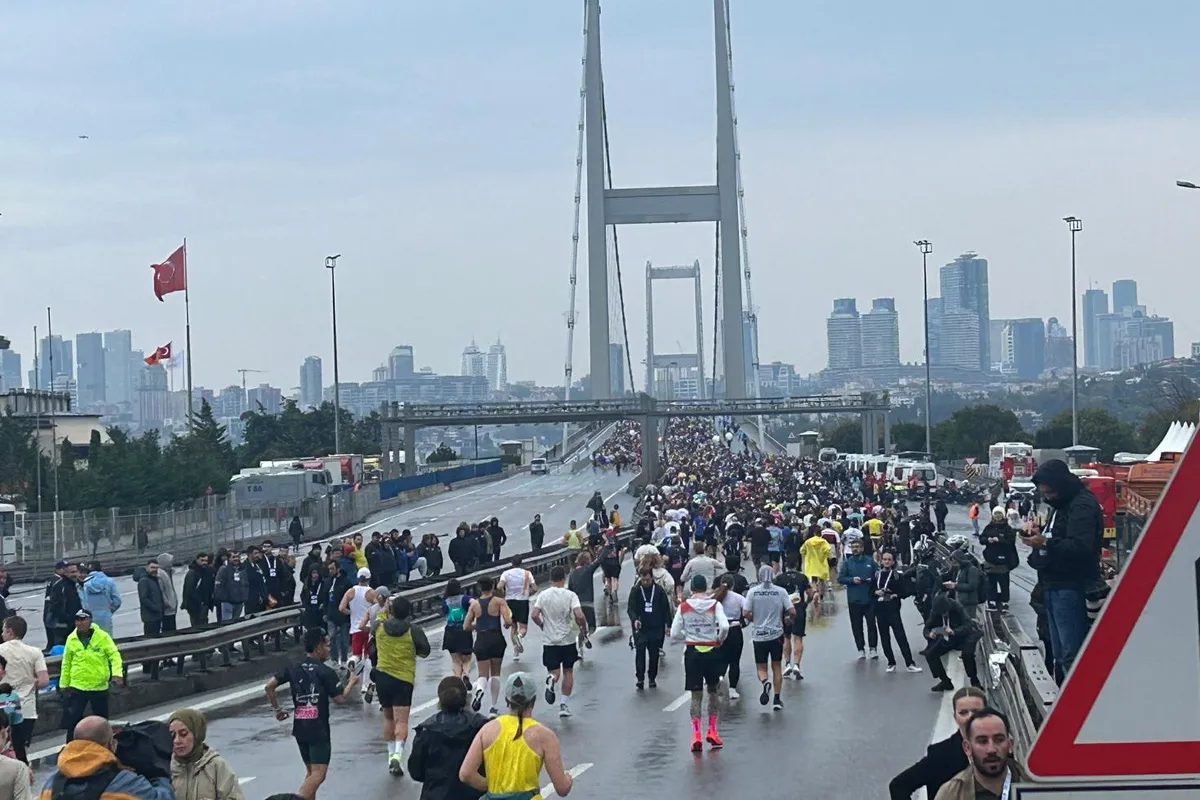
İstanbul Büyükşehir Belediyesi tarafından düzenlenen 48. İstanbul Maratonu, 15 Temmuz Şehitler Köprüsü'nden verilen startla başladı. Organizasyon kapsamında farklı kategorilerde yarışlar gerçekleştiriliyor.
History
Modern municipal government in Istanbul began in 1855 with the founding of the Şehremaneti; its first head (şehremini) was Salih Pasha. Municipal Law No. 1580 came into force in 1930. The City Hall in Saraçhane was designed by architect Nevzat Erol, winner of a competition held in 1953. Istanbul Metropolitan Municipality was established in 1984 under Law No. 3030; its first elected metropolitan mayor was Bedrettin Dalan.
Departments & Services
- Transport and Rail Systems
- Fire Brigade
- Parks and Gardens
- Social Services
- Culture and Arts
- Zoning and Urban Planning
- Municipal Police
Affiliated bodies include IETT, ISKI and Metro Istanbul.
About
İstanbul, Türkiye'nin bir ilidir. Türkiye'nin Marmara Bölgesi'nde bulunur. Nüfus bakımından Türkiye'nin en kalabalık ve en çok göç alan ilidir. İdari merkezi İstanbul şehridir.
Kaynak: Wikipedia · CC BY-SA 4.0
Tarih
İstanbul tarihi, günümüzde Türkiye toprakları üzerinde bulunan İstanbul şehrinin tarihini anlatır. İstanbul'un tarihi, ana hatlarıyla beş büyük döneme ayrılabilir: Tarih öncesi dönem, Roma İmparatorluğu dönemi, Bizans İmparatorluğu dönemi, Osmanlı İmparatorluğu dönemi ve Türkiye Cumhuriyeti dönemi.
İstanbul, 4. yüzyıldan 20. yüzyıla kadar yaklaşık on altı yüzyıl boyunca dünyanın en önemli ve en büyük metropolleri arasında bulunmuş bir şehir olmuştur. Avrupa, Asya ve Afrika kıtalarının buluştuğu geniş bir bölgenin tartışmasız tek hâkimi olmuş ve bu süreç içerisinde dünya tarihini önemli derecede etkilemeyi başarmıştır. İstanbul yaklaşık 1600 yıl boyunca, MS 330'dan 1922'ye kadar bulunan dönemde; sırasıyla Roma İmparatorluğu (330-395), Bizans İmparatorluğu (395-1204, 1261-1453), Latin İmparatorluğu (1204-1261) ve Osmanlı İmparatorluğu (1453-1922) olmak üzere dört farklı imparatorluğa başkentlik yapmıştır. Bu imparatorlukların üçü, var oldukları dönemde dünyanın iktidar sahibi ve en güçlü devletleri olarak tarihe geçmiştir. Hepsinin İstanbul'dan yönetildiği düşünüldüğünde, şehrin tarihsel önemi ve değeri kolaylıkla anlaşılabilir.
1922'de Osmanlı İmparatorluğu'nun yıkılıp 13 Ekim 1923'te Ankara'nın yeni kurulan Türk devletinin başkenti olmasıyla birlikte yüzyıllık köklü başkentlik özelliğini kaybeden İstanbul şehri, 4. yüzyıldan 20. yüzyıla kadar on altı yüzyıl boyunca koruduğu her alanda etkin bir dünya şehri olma özelliğini, Türkiye Cumhuriyeti'nin kuruluşundan sonra tekrar kazanmaya başlamış ve günümüzde Avrupa ve Orta Doğu'nun en önemli merkezleri arasında kendine yer bulmuştur.
İstanbul'un yerleşim tarihi yaklaşık 300 bin, kentsel tarihi yaklaşık 3 bin, başkentlik tarihi ise 1600 yıla kadar uzanır. Avrupa ile Asya kıtalarının kesiştiği noktada bulunan İstanbul, çağlar boyunca farklı uygarlık ve kültürlere ev sahipliği yapmış, yüzyıllar boyu çeşitli din, dil ve ırktan insanların bir arada yaşadığı kozmopolit ve metropolit bir şehir olmuş ve tarihsel süreçte eşsiz bir mozaik hâlini almıştır. Uzun zaman dilimleri boyunca her alanda merkez olmayı ve iktidarda kalmayı başaran dünyadaki ender yerleşim yerlerinden biri olmuştur.
Kaynak: Vikipedi, «İstanbul tarihi» maddesi. CC BY-SA.
Turizm ve gezilecek yerler
İstanbul'un tarihi, anıtlar ve yapıtların fazlalığı ve Boğaz'a sahip olması nedeniyle gözde turizm merkezlerinden biridir. Turistler arasında en büyük pay Almanlara aittir. Almanları Ruslar, Amerikalılar, İtalyanlar ve Fransızlar izler. 2021 yılında kente 9 milyon 25 bin turist gelmiştir. İstanbul'da her bütçeye uygun otel bulmak mümkündür. 5 yıldızlı zincir otellerden, butik aile işletmesi otellere kadar 1180'den fazla otel bulunmaktadır. Son yıllarda dünya çapında isim yapmış zincir oteller İstanbul'a yoğun ilgi göstermektedirler.
Binlerce yıldır, değişik insan topluluklarına yurt olan İstanbul topraklarının hemen her yöresinde, tarihin çeşitli dönemlerinden kalma tarihî eserlerle karşılaşmak mümkündür. Envanterlerde kayıtlı binlerce tarihî eser arasında, kent duvarları, saraylar, kasırlar, camiler, kiliseler, sinagoglar, çeşmeler ve konaklar bulunur.
2009 yılı istatistiklerine göre İstanbul, Antalya'dan sonra en çok turist ağırlayan ildir. 2009 yılı içinde ile hava, kara ve deniz yoluyla giriş yapan turist sayısı 7,5 milyonun biraz üzerindedir. Bunlar içinde %13,1'lik payla Almanlar birinci, 6,7'lik payla Ruslar ikinci sırada bulunur. İstanbul'un ağırladığı ilk turist kafilesi, 1863 yılında Sergi-i Umumi-i Osmani'yi ziyaret için gelmişti. Daha sonra İstanbul'un demiryoluyla Avrupa'ya bağlanmasıyla turist sayısı daha da artmış, artan konaklama talebini karşılamak için İstanbul'un ilk oteli Pera Palas kurulmuştur.
İstanbul'da 2009 verilerine göre işletme belgeli 371 konaklama ve 405 eğlence tesisi bulunmaktadır. İstanbul'da pek çok müze bulunmaktadır ve bunlar içinde özel müzeler de vardır. 2009 yılında yalnızca devlet müzelerini 6.179.556 kişi ziyaret etmiştir. Ziyaret edilen mekânlar arasında 2.932.429 kişi ile Topkapı Sarayı başı çekerken, onu 2.444.956 kişiyle Ayasofya Müzesi izlemiştir. İstanbul'un tarihsel merkezi konumundaki Fatih ilçesi (Tarihî yarımada), Haliç çevresi yerleşimleri Beyoğlu ve Eyüpsultan; Boğaziçi'nde Beşiktaş ve Sarıyer; Anadolu Yakası'nda Kadıköy, Üsküdar ve Adalar ilçeleri İstanbul'un tarih turizmi açısından zengin merkezleri arasında yer almaktadır. Doğa turizmi içinse Beykoz, Şile, Adalar ve Sarıyer'de ilgi çekici adresler vardır.
Yönetim

Merkezi Yönetim
Büyükşehir illerinde Merkezi yönetim vali, il müdürleri ve İl Danışma Kurulundan oluşur. İstanbul, bir ‘büyükşehir'dir. Bu özelliğine göre yönetimi belirlenmiştir. Protokolde ilk sırada yer alan vali, merkezi yönetimi temsil eder ve cumhurbaşkanı tarafından atanır. Büyükşehir yapılan illerde, İl Genel Meclisi, yetki ve görevlerini Büyükşehir Belediye Meclisi'ne devretmiş ve kaldırılmıştır.
İstanbul Valisi 1974 Horasan doğumlu Davut Gül, 5 Haziran 2023 tarihinde, Gaziantep Valisi iken atanmıştır.
Yerel yönetim
Mevcut İstanbul büyükşehir belediye başkan vekili Nuri Aslan'dır. Ancak onun yerine seçilmiş İBB Belediye Başkan Vekili Nuri Aslan'dır.
Büyükşehir belediyelerinde yerel yönetim; büyükşehir belediye başkanı, büyükşehir belediye meclisi ve büyükşehir belediye encümeninden oluşur. Yerel yönetimi temsil eden büyükşehir belediye başkanı, ildeki tüm seçmenlerin oy çokluğu ile seçilir. Yerel seçimlerde ilçe belediye başkanı ve İlçe Belediye Meclisi için de oy kullanılarak ilçelerin belediye meclisleri oluşur. İlçe meclislerinden alınan üyelerle (başkan kontenjanı, ilçe nüfusu ve parti oy oranına göre) de Büyükşehir Belediye Meclisi oluşur. Bu mecliste ilçe belediye başkanları da yer alır. Meclisin başkanı Büyükşehir Belediye Başkanı'dır. Büyükşehir belediye encümeni, belediye başkanının başkanlığında, belediye meclisinin kendi üyeleri arasından bir yıl için gizli oyla seçeceği beş üye ile biri genel sekreter, biri malî hizmetler birim amiri olmak üzere belediye başkanının her yıl birim amirleri arasından seçeceği beş üyeden oluşur. (5216 saylı kanun 16.madde)
Bugünkü İstanbul Büyükşehir Belediye Binası Fatih ilçesinin Saraçhane adıyla bilinen bölgesinde bulunmaktadır. Bina, 17 Aralık 1953 yılında tamamlanmış, 26 Mayıs 1960 tarihinde belediye binası olarak hizmet vermeye başlamıştır.
31 Mart 2024 Pazar günü yapılan yerel seçimlerde Ekrem İmamoğlu (CHP) %51,14 oy oranıyla seçimi kazanmıştır.
Nüfus
Türkiye İstatistik Kurumu'nun (TÜİK) hazırlamış olduğu 2023 yılı Adrese Dayalı Nüfus Kayıt Sistemi (ADNKS) sonuçlarına göre İstanbul'un (İstanbul Büyükşehir Belediyesi ve bağlı belediyelerin sınırları içindeki nüfus) toplam nüfusu 15 milyon 655 bin 924 kişidir.
İstanbul'un 14'ü Anadolu Yakasında, 25'i Avrupa Yakasında olmak üzere toplam 39 ilçesi vardır. İstanbul'un 39 ilçesi nüfus sayısı bakımından 2023 yılı verilerine göre incelendiğinde en yüksek nüfusa sahip ilçesi Esenyurt (978.007), en az nüfusa sahip ilçesi de Adalar (16.325) olmuştur.
2019 yılı verilerine göre İstanbul'da yaşayanların %65,06'sı (10.097.862) Avrupa Yakası; %34,94'ü de (5.421.405) Anadolu Yakası'nda ikamet eder.
İstanbul'da ikamet edenlerin yalnızca yüzde 15,38'inin nüfusu İstanbul'a kayıtlıdır. İkamet edenlerin nüfusa kayıtlı oldukları illere göre yapılan sıralamada Sivas 736.542 (%5,20), Kastamonu 548.546 (%3,87), Ordu 499.782 (%3,52), Giresun 487.115 (%3,43), Tokat 455.817 (%3,21), Samsun 417.120 (%2,94), Trabzon 395.474 (%2.79), Malatya 392.435 (%2,77), Erzurum 382.519 (%2,70), Sinop 366.681 (%2,58) ve Erzincan 302.511 (%2,13) kişi ile en üst sıralardadır.
Güncel nüfus verisi (2025)
İstanbul İl Nüfusu: 15.754.053 (2025 sonu). İlin yüzölçümü 5461 km2dir. İlde km2ye 2.943 kişi düşmektedir. (Yoğunluğun en fazla olduğu ilçe: 39.866 kişi ile Gaziosmanpaşa'dır.)
İlde yıllık nüfus artış oranı %0,33 olmuştur. Nüfus artış oranı en yüksek ve en düşük ilçeler: Tuzla (%4,14) - Güngören (-%5,13)
09 Şubat 2026 TÜİK verilerine göre 39 ilçe ve belediye, bu belediyelerde toplam 961 mahalle bulunmaktadır.
Kaynak: Wikipedia – İstanbul (il) · CC BY-SA 4.0
Names
The first known name of the city is Byzantium (Ancient Greek: Βυζάντιον, Byzántion), the name given to it at its foundation by Megarian colonists around 657 BC. Megarian colonists claimed a direct line back to the founders of the city, Byzas, the son of the god Poseidon and the nymph Ceroëssa. Modern excavations have raised the possibility that the name Byzantium might reflect the sites of native Thracian settlements that preceded the fully-fledged town. Constantinople (Greek: Κωνσταντινούπολις, romanized: Kōnstantinoupolis; Latin: Constantinopolis) comes from the Latin name Constantinus, after Constantine the Great, the Roman emperor who refounded the city in 324 AD. Constantine had initially called the city New Rome (Ancient Greek: Νέα Ῥώμη; Nea Rhomē; Latin: Nova Roma). Constantinople remained the most common name for the city in the West until the 1930s, when Turkish authorities began to press for the use of Istanbul in foreign languages. Ḳosṭanṭīnīye (Ottoman Turkish: قسطنطينيه) and İstanbul were the names used alternatively by the Ottomans during their rule.
The name İstanbul (Ottoman Turkish: استانبول; [isˈtanbuɫ] or colloquially pronounced [ɯsˈtambuɫ]) is commonly held to derive from the Medieval Greek phrase eis tḕn Pólin (εἰς τὴν Πόλιν, pronounced [is tim ˈbolin]), literally "to the city", and is how Constantinople was referred to by the local Greeks. This reflected its status as the only major city in the vicinity. The importance of Constantinople in the Ottoman world was also reflected by its nickname Dersaadet (Ottoman Turkish: درساعدت) meaning the 'Gate to Prosperity' in Ottoman Turkish. An alternative view is that the name evolved directly from "Constantinople", with the first and third syllables dropped. Some Ottoman sources of the 17th century, such as Evliya Çelebi, describe it as the common Turkish name of the time; between the late 17th and late 18th centuries, it was also in official use. The first use of the word Islambol (Ottoman Turkish: اسلامبول) on coinage was in 1730 during the reign of Sultan Mahmud I. In modern Turkish, the name is written as İstanbul, with a dotted İ, as the Turkish alphabet distinguishes between a dotted and dotless I. In English, the stress is on the first or last syllable, but in Turkish it is on the second syllable. A person from the city is an İstanbullu (plural İstanbullular); Istanbulite is used in English.
History

Neolithic artifacts, uncovered by archeologists at the beginning of the 21st century, indicate that Istanbul's historic peninsula was settled as far back as the 6th millennium BC. That early settlement, important in the spread of the Neolithic Revolution from the Near East to Europe, lasted for almost a millennium before being inundated by rising water levels. The first human settlement on the Asian side, the Fikirtepe mound, is from the Copper Age period, with artifacts dating from 5500 to 3500 BC, On the European side, near the point of the peninsula (Sarayburnu), there was a Thracian settlement during the early 1st millennium BC. Modern authors have linked it to the Thracian toponym Lygos, mentioned by Pliny the Elder as an earlier name for the site of Byzantium.
The history of the city proper begins around 660 BC, when Greek settlers from Megara established Byzantium on the European side of the Bosporus. The settlers built an acropolis adjacent to the Golden Horn on the site of the early Thracian settlements, fueling the nascent city's economy. The city experienced a brief period of Persian rule at the turn of the 5th century BC, but the Greeks recaptured it during the Greco-Persian Wars. Byzantium then continued as part of the Athenian League and its successor, the Second Athenian League, before gaining independence in 355 BC. Long allied with the Romans, Byzantium officially became a part of the Roman Empire in 73 AD. Byzantium's decision to side with the Roman usurper Pescennius Niger against Emperor Septimius Severus cost it dearly; by the time it surrendered at the end of 195 AD, two years of siege had left the city devastated. Five years later, Severus began to rebuild Byzantium, and the city regained – and, by some accounts, surpassed – its previous prosperity.
Geography and environment

Istanbul is in north-western Turkey and straddles the Bosporus Strait, which provides the only passage from the Black Sea to the Mediterranean via the Sea of Marmara. Historically, the city has been ideally situated for trade and defense: The confluence of the Sea of Marmara, the Bosporus, and the Golden Horn provide both ideal defense against enemy attack and a natural toll-gate. Several picturesque islands – Büyükada, Heybeliada, Burgazada, Kınalıada, and five smaller islands – are part of the city. Istanbul's shoreline has grown beyond its natural limits. Large sections of Caddebostan sit on areas of landfill, increasing the total area of the city to 5,343 square kilometers (2,063 sq mi).
Despite the myth that seven hills make up the city, there are, in fact, more than 50 hills within the city limits. Istanbul's tallest hill, Aydos, is 537 meters (1,762 ft) high.
Earthquakes
The North Anatolian Fault, under the Sea of Marmara, is locked just south of the city. This fault caused the earthquakes in 1766 and 1894, and a quake of at least magnitude 7.0 is very likely in the 21st century, though an earthquake with a magnitude above 7.5 is thought to be impossible. Istanbul Municipality's Directorate of Earthquake and Ground Research is responsible for analysing the methods to reduce the urban seismic risk, whereas the national government-controlled Disaster and Emergency Management Presidency is responsible for earthquake emergency response, and will be helped by NGOs such as İHH.
The threat of major earthquakes plays a large role in the city's infrastructure development, with over 500,000 vulnerable buildings demolished and replaced since 2012. According to ministry statements and geologist comments made in 2023, the city's infrastructure was in reasonably good shape, however, due to very high costs, buildings were not: over half a million flats were still vulnerable to collapse, and casualties largely depend on how many collapse. As of 2024, most buildings in Istanbul were built to a low seismic standard in the 20th century, and residents think the city is not properly prepared for the earthquake. On 23 April 2025 an earthquake with a preliminary magnitude of 6.2 shook the city and other areas. Many people were treated for injuries they suffered while trying to jump from buildings or for panic attacks. The earthquake was felt as far as provinces of Tekirdağ, Yalova, Bursa and Balıkesir and in the coastal city of İzmir.
Cityscape

European side
Rumeli ("Rumelia") is a local nickname for the European side of Istanbul.
The Fatih district, which was named after Mehmed II (Turkish: Fatih Sultan Mehmed), corresponds to what was the whole of Constantinople until the Ottoman conquest; today it is the capital district and called the historic peninsula of Istanbul on the southern shore of the Golden Horn, across the medieval Genoese citadel of Galata on the northern shore. The Genoese fortifications in Galata were largely demolished in the 19th century, leaving only the Galata Tower, to make way for the northward expansion of the city. Galata (Karaköy) is today a quarter within the Beyoğlu district, which forms Istanbul's commercial and entertainment center and includes İstiklal Avenue and Taksim Square.
Dolmabahçe Palace, the seat of government during the late Ottoman period, is in the Beşiktaş district on the European shore of the Bosporus, to the north of Beyoğlu. The former village of Ortaköy is within Beşiktaş and gives its name to the Ortaköy Mosque on the Bosporus, near the Bosporus Bridge. Lining both the European and Asian shores of the Bosporus are the historic yalıs, luxurious chalet mansions built by Ottoman aristocrats and elites as summer homes. Inland, north of Taksim Square is the Istanbul Central Business District, a set of corridors lined with office buildings, residential towers, shopping centers, and university campuses, and over 2,000,000 m2 (22,000,000 sq ft) of class-A office space in total. Maslak, Levent, and Bomonti are important nodes within the CBD.
The Atatürk Airport corridor is another such edge city-style business, residential and shopping corridor with over 900,000 m2 (9,700,000 sq ft) of class-A office space.
Asian side
During the Ottoman period, Üsküdar (then Scutari) and Kadıköy were outside the scope of the urban area, serving as tranquil outposts with seaside yalıs and gardens. But in the second half of the 20th century, the Asian side experienced major urban growth; the late development of this part of the city led to better infrastructure and tidier urban planning when compared with most other residential areas in the city. Much of the Asian side of the Bosporus functions as a suburb of the economic and commercial centers in European Istanbul, accounting for a third of the city's population but only a quarter of its employment. However, Kozyatağı–Ataşehir, Altunizade, Kavacık and Ümraniye, all together having about 1.4 million sqm of class-A office space, are now important "edge cities", i.e. corridors and nodes of business and shopping centers and of tall residential buildings.
Government and politics

Istanbul Metropolitan Municipality
Established in 1930 and restructured with the Metropolitan Municipalities Law of 2004, the Istanbul Metropolitan Municipality (Turkish: İstanbul Büyükşehir Belediyesi) is the main citywide local government authority responsible for public works, water infrastructure, transportation, cultural services, and such. It is a remarkable employer in Turkey with an accumulated amount of over 80,000 personnel.
The current city structure traces back to the Tanzimat reforms of the 19th century. Prior to that, local administration was held by Qadis, who were appointed by the Grand Vizier. Some religious cults and guilds also provided services for their communities. The Industrial Revolution, though Ottomans were not affected in a great extent, caused influx by foreign merchants as Constantinople was laid between two continents, and the imperial government signed bilateral trade agreements with many European countries, increasing the trade volume, especially with Eastern Mediterranean ports, such as Smyrna, Thessaloniki, Alexandria, and Beirut.
In 1854, during the Crimean War, intensfying ties between the Ottoman Empire and other European powers has brought the reformizing Ottoman bureaucracy into implementing local government authority for Constantinople. The first local government authority, Şehremaneti, was inspired from the French commune system. Laws enacted after the Ottoman constitution of 1876 aimed to expand this structure across the city, imitating the twenty arrondissements of Paris, but they were not fully implemented until 1908 when the city was declared a province with nine constituent districts. Though Şehremaneti and its successors were disbanded by the Turkish Revolution, the system itself continued with the establishment of Istanbul Municipality in 1930.
The Municipal Council of Istanbul is the legislative organ of the Istanbul Metropolitan Municipality. Every five years, 314 local councillors are elected by popular vote. The council is the sole authority in matters regarding the municipality's jurisdiction, with an exception, UKOME (Transportation Coordination Center), which is partnered with central government agencies.
Demographics

Throughout most of its history, Istanbul has ranked among the largest cities in the world. By 500 CE, Constantinople had somewhere between 400,000 and 500,000 people, edging out its predecessor, Rome, for the world's largest city. Constantinople jostled with other major historical cities, such as Baghdad, Chang'an, Kaifeng and Merv for the position of the world's largest city until the 12th century. It never returned to being the world's largest, but remained the largest city in Europe from 1500 to 1750, when it was surpassed by London.
The Turkish Statistical Institute estimates that the population of Istanbul Metropolitan Municipality was 15,519,267 at the end of 2019, hosting 19% of the country's population. 64.4% of the residents live on the European side and 35.6% on the Asian side.
Istanbul ranks as the seventh-largest city proper in the world, and the second-largest urban agglomeration in Europe, after Moscow. The city's annual population growth of 1.5% ranks as one of the highest among the seventy-eight largest metropolises in the Organisation for Economic Co-operation and Development. The high population growth mirrors an urbanization trend across the country, as the second and third fastest-growing OECD metropolises are the Turkish cities of İzmir and Ankara.
Istanbul experienced especially rapid growth during the second half of the 20th century, with its population increasing tenfold between 1950 and 2000. This growth was fueled by internal and international migration. Istanbul's foreign population with a residence permit increased dramatically, from 43,000 in 2007 to 856,377 in 2019.
According to 2020 TÜİK data, about 2.1 million people in a population of over 15.4 million have been registered in Istanbul, meanwhile the vast majority of the residents ultimately originate from Anatolian provinces, especially those in the Black Sea, Central and Eastern Anatolia regions due to internal migration since the 1950s. People registered in Kastamonu, Ordu, Giresun, Erzurum, Samsun, Malatya, Trabzon, Sinop and Rize provinces represent the biggest population groups in Istanbul, meanwhile people registered in Sivas has the highest percentage with more than 760 thousand residents in the city. A 2019 survey found that only 36% of the Istanbul's population was born in the province.
Economy

Istanbul had the eleventh-largest economy among the world's urban areas in 2018, and is responsible for 30% of Turkey's industrial output, 31% of GDP, and 47% of tax revenues. The city's gross domestic product adjusted by PPP stood at US$537.507 billion in 2018, with manufacturing and services accounting for 36% and 60% of the economic output respectively. Istanbul's productivity is 110% higher than the national average. Trade is economically important, accounting for 30% of the economic output in the city. In 2019, companies based in Istanbul produced exports worth $83.66 billion and received imports totaling $128.34 billion; these figures were equivalent to 47% and 61%, respectively, of the national totals.
Istanbul, which straddles the Bosporus strait, houses international ports that link Europe and Asia. The Bosporus, providing the only passage from the Black Sea to the Mediterranean, is the world's busiest and narrowest strait used for international navigation, with more than 200 million tons of oil passing through it each year. International conventions guarantee passage between the Black and the Mediterranean seas, even when tankers carry oil, natural gas, chemicals, and other flammable or explosive materials as cargo. In 2011, as a workaround solution, the then Prime Minister Erdoğan presented Canal Istanbul, a project to open a new strait between the Black and Marmara seas. While the project was still on Turkey's agenda in 2020, there has not been a clear date set for it.
Shipping is a significant part of the city's economy, with 73.9% of exports and 92.7% of imports in 2018 executed by sea. Istanbul has three major shipping ports – the Port of Haydarpaşa, the Port of Ambarlı, and the Port of Zeytinburnu – as well as several smaller ports and oil terminals along the Bosporus and the Sea of Marmara. Haydarpaşa, at the southeastern end of the Bosporus, was Istanbul's largest port until the early 2000s. Since then operations were shifted to Ambarlı, with plans to convert Haydarpaşa into a tourism complex. In 2019, Ambarlı, on the western edge of the urban center, had an annual capacity of 3,104,882 TEUs, making it the third-largest cargo terminal in the Mediterranean basin.
Culture

Istanbul was historically known as a cultural hub, but its cultural scene stagnated after the Turkish Republic shifted its focus toward Ankara. The new national government established programs that served to orient Turks toward musical traditions, especially those originating in Europe, but musical institutions and visits by foreign classical artists were primarily centered in the new capital.
Much of Turkey's cultural scene had its roots in Istanbul, and by the 1980s and 1990s Istanbul reemerged globally as a city whose cultural significance is not solely based on its past glory.
By the end of the 19th century, Istanbul had established itself as a regional artistic center, with Turkish, European, and Middle Eastern artists flocking to the city. Despite efforts to make Ankara Turkey's cultural heart, Istanbul had the country's primary institution of art until the 1970s. When additional universities and art journals were founded in Istanbul during the 1980s, artists formerly based in Ankara moved in.
Beyoğlu has been transformed into the artistic center of the city, with young artists and older Turkish artists formerly residing abroad finding footing there. Modern art museums, including İstanbul State Art and Sculpture Museum, National Palaces Painting Museum, İstanbul Modern, the Pera Museum, Sakıp Sabancı Museum, Arter and SantralIstanbul, opened in the 2000s to complement the exhibition spaces and auction houses that have already contributed to the cosmopolitan nature of the city. These museums have yet to attain the popularity of older museums on the historic peninsula, including the Istanbul Archaeology Museums, which ushered in the era of modern museums in Turkey, and the Turkish and Islamic Arts Museum.
The first film screening in Turkey was at Yıldız Palace in 1896, a year after the technology publicly debuted in Paris. Movie theaters rapidly cropped up in Beyoğlu, with the greatest concentration of theaters being along the street now known as İstiklal Avenue. Istanbul also became the heart of Turkey's nascent film industry, although Turkish films were not consistently developed until the 1950s. Since then, Istanbul has been the most popular location to film Turkish dramas and comedies. The Turkish film industry ramped up in the second half of the century, and with Uzak (2002) and My Father and My Son (2005), both filmed in Istanbul, the nation's movies began to see substantial international success. Istanbul and its picturesque skyline have also served as a backdrop for several foreign films, including From Russia with Love (1963), Topkapi (1964), The World Is Not Enough (1999), and Mission Istaanbul (2008).
Sports

Istanbul is home to some of Turkey's oldest sports clubs. Beşiktaş J.K., established in 1903, is considered the oldest of these sports clubs. Due to its initial status as Turkey's only club, Beşiktaş occasionally represented the Ottoman Empire and Turkish Republic in international sports competitions, earning the right to place the Turkish flag inside its team logo. Galatasaray S.K. and Fenerbahçe S.K. have fared better in international competitions and have won more Süper Lig titles, at 24 and 19 times, respectively. Galatasaray and Fenerbahçe have a long-standing rivalry, with Galatasaray based in the European part and Fenerbahçe based in the Anatolian part of the city. Istanbul has seven basketball teams – Anadolu Efes, Beşiktaş, Darüşşafaka, Fenerbahçe, Galatasaray, İstanbul Büyükşehir Belediyespor and Büyükçekmece – that play in the premier-level Basketbol Süper Ligi.
Many of Istanbul's sports facilities have been built or upgraded since 2000 to bolster the city's bids for the Summer Olympic Games. Atatürk Olympic Stadium, the largest multi-purpose stadium in Turkey, was completed in 2002 as an IAAF first-class venue for track and field. The stadium hosted the 2005 UEFA Champions League Final, and was selected by the UEFA to host the CL Final games of 2020 and 2021, which were relocated to Lisbon (2020) and Porto (2021) due to the COVID-19 pandemic. Şükrü Saracoğlu Stadium, Fenerbahçe's home field, hosted the 2009 UEFA Cup Final three years after its completion. Türk Telekom Arena opened in 2011 to replace Ali Sami Yen Stadium as Galatasaray's home turf, while Beşiktaş Stadium, opened in 2016 to replace BJK İnönü Stadium as the home turf of Beşiktaş, hosted the 2019 UEFA Super Cup game. All four stadiums are elite Category 4 (formerly five-star) UEFA stadiums.
The Sinan Erdem Dome, among the largest indoor arenas in Europe, hosted the final of the 2010 FIBA World Championship, the 2012 IAAF World Indoor Championships, as well as the 2011–12 Euroleague and 2016–17 EuroLeague Final Fours. Prior to the completion of the Sinan Erdem Dome in 2010, Abdi İpekçi Arena was Istanbul's primary indoor arena, having hosted the finals of EuroBasket 2001. Several other indoor arenas, including the Beşiktaş Akatlar Arena, have also been inaugurated since 2000, serving as the home courts of Istanbul's sports clubs. The most recent of these is the 13,800-seat Ülker Sports Arena, which opened in 2012 as the home court of Fenerbahçe's basketball teams. Despite the construction boom, five bids for the Summer Olympics – in 2000, 2004, 2008, 2012, and 2020 – and national bids for UEFA Euro 2012 and UEFA Euro 2016 have ended unsuccessfully. The city will host the 2027 edition of the European Games.
Media

Most state-run radio and television stations are based in Ankara, but Istanbul is the primary hub of Turkish media. The industry has its roots in the former Ottoman capital, where the first Turkish newspaper, Takvim-i Vekayi (Calendar of Affairs), was published in 1831. The Cağaloğlu street on which the newspaper was printed, Bâb-ı Âli Street, rapidly became the center of Turkish print media, alongside Beyoğlu across the Golden Horn.
Istanbul now has a wide variety of periodicals. Most nationwide newspapers are based in Istanbul, with simultaneous Ankara and İzmir editions. Hürriyet, Sabah, Posta and Sözcü, the country's top four papers, are all headquartered in Istanbul, boasting more than 275,000 weekly sales each. Hürriyet's English-language edition, Hürriyet Daily News, has been printed since 1961, but the English-language Daily Sabah, first published by Sabah in 2014, has overtaken it in circulation. Several smaller newspapers, including popular publications like Cumhuriyet, Milliyet and Habertürk are also based in Istanbul. Istanbul also has long-running Armenian language newspapers, notably the dailies Marmara and Jamanak and the bilingual weekly Agos in Armenian and Turkish.
Office in Eminönü. Control of this transmission, and other radio stations established in the following decades, ultimately came under the state-run Turkish Radio and Television Corporation (TRT), which held a monopoly on radio and television broadcasts between its founding in 1964 and 1990. Today, TRT runs four national radio stations; these stations have transmitters across the country so each can reach over 90% of the country's population, but only Radio 2 is based in Istanbul. Offering a range of content from educational programming to coverage of sporting events, Radio 2 is the most popular radio station in Turkey. Istanbul's airwaves are the busiest in Turkey, primarily featuring either Turkish-language or English-language content. One of the exceptions, offering both, is Açık Radyo (94.9 FM). Among Turkey's first private stations, and the first featuring foreign popular music, was Istanbul's Metro FM (97.2 FM). The state-run Radio 3, although based in Ankara, also features English-language popular music, and English-language news programming is provided on NTV Radyo (102.8 FM).
Education

As of 2019, excluding universities more than 3.1 million students attended 7,437 schools in Istanbul, about half of the schools being private schools. The average class size was 30 for primary education institutes, 27 for vocational schools and 23 for general high schools. Of the 842 public high schools, 263 are vocational schools, another 263 are Anatolian high schools, 207 are religiously oriented İmam Hatip schools, and 14 are STEM-oriented science high schools. Galatasaray High School was established in 1481 and is the oldest public high school in Turkey. Kabataş Erkek Lisesi, Istanbul Lisesi and Cağaloğlu Anatolian High School are among other public high schools in the city. Istanbul also contains high schools established by the European and American expatriates and missionaries in the 19th century that currently offer secular, foreign-language education such as Robert College, Deutsche Schule Istanbul, Sankt Georgs-Kolleg, Lycée Saint-Joseph and Liceo Italiano di Istanbul. Furthermore Turkish citizens of Jewish, Armenian, Greek and Assyrian descent are allowed to establish and attend their respective schools as granted in the Treaty of Lausanne, Phanar Greek Orthodox College being an example. Most high schools are highly selective and demand high scores from the national standardized LGS exam for admission, with Galatasaray and Robert College only accepting the top 0.1% to 0.01% of the exam takers.
Istanbul contains almost a third of all universities in Turkey. As of 2019 Istanbul has 61 colleges and universities, with more than 1.8 million students enrolled according to official figures. Of those, fourteen are state-owned, 44 are "foundation-owned" private universities and three are foundation-owned vocational universities of higher education. There are also military academies, including the Turkish Air Force Academy and Turkish Naval Academy as well as four foundation-owned vocational universities of higher education which are not affiliated with any university.
Public services

Istanbul's first water supply systems date back to the city's early history, when aqueducts (such as the Valens Aqueduct) deposited the water in the city's numerous cisterns. At the behest of Suleiman the Magnificent, the Kırkçeşme water supply network was constructed; by 1563, the network provided 4,200 cubic meters (150,000 ft3) of water to 158 sites each day. In later years, in response to increasing public demand, water from various springs was channeled to public fountains, like the Fountain of Ahmed III, by means of supply lines. Today, Istanbul has a chlorinated and filtered water supply and a sewage treatment system managed by the Istanbul Water and Sewerage Administration (İstanbul Su ve Kanalizasyon İdaresi, İSKİ).
The Silahtarağa Power Station, a coal-fired power station along the Golden Horn, was the sole source of Istanbul's electricity between 1914, when its first engine room was completed, and 1952. Following the founding of the Turkish Republic, the plant underwent renovations to accommodate the city's increasing demand; its capacity grew from 23 megawatts in 1923 to a peak of 120 megawatts in 1956. Capacity declined until the power station reached the end of its economic life and shut down in 1983. The state-run Turkish Electrical Authority (TEK) briefly – between its founding in 1970 and 1984 – held a monopoly on the generation and distribution of electricity, but now the authority – since split between the Turkish Electricity Generation Transmission Company (TEAŞ) and the Turkish Electricity Distribution Company (TEDAŞ) – competes with private electric utilities.
The Ottoman Ministry of Post and Telegraph was established in 1840 and the first post office, the Imperial Post Office, opened near the courtyard of Yeni Mosque. By 1876, the first international mailing network between Istanbul and the lands beyond the Ottoman Empire had been established. Sultan Abdülmecid I issued Samuel Morse his first official honor for the electrical telegraph in 1847, and construction of the first telegraph line – between Istanbul and Edirne – finished in time to announce the end of the Crimean War in 1856.
Transportation

Roads
Istanbul's motorways network are the O-1, O-2, O-3, O-4 and O-7. The total length of Istanbul Province's network of toll roads is 543 km (337 mi) (2024) and the state highways network (devlet yolları) is 353 km (219 mi) (2024), totaling 896 km (557 mi) of expressway roads (minimum 2x2 lanes), excluding secondary roads and urban streets. The density of expressway network is 16.8 km/100 km2. The O-1 forms the city's inner ring road, traversing the Bosphorus Bridge, and the O-2 is the city's outer ring road, crossing the Fatih Sultan Mehmet Bridge. The O-2 continues west to Edirne and the O-4 continues east to Ankara. The O-2, O-3, and O-4 are part of European route E80 (the Trans-European Motorway) between Portugal and the Iran–Turkey border. In 2011, the first and second bridges on the Bosphorus carried 400,000 vehicles each day. The O-7 or Kuzey Marmara Otoyolu, is a motorway that bypass Istanbul to the north. The O-7 motorway from Kinali Gişeleri to Istanbul Park Service has 139.2 km (86.5 mi), with 8 lanes (4x4), and from Odayeri-K10 to Istanbul Atatürk Airport has 30.4 km (18.9 mi). The completed section of highway crosses the Bosporus via the Yavuz Sultan Selim (Third Bosphorus) Bridge, entered service on 26 August 2016. The O-7 (Northern Beltway) 3.Beltway connects Istanbul Atatürk Airport with Istanbul Airport and Sabiha Gökçen Airport. Environmentalist groups worry that the third bridge will endanger the remaining green areas to the north of Istanbul. Apart from the three Bosphorus Bridges, the dual-deck, 14.6-kilometer (9.1 mi) Eurasia Tunnel (which entered service on 20 December 2016) under the Bosphorus strait also provides road crossings for motor vehicles between the Asian and European sides of Turkey. Road transport emits significant carbon dioxide, estimated at 7 million tons in 2021.
Kaynak: Wikipedia – Istanbul · CC BY-SA 4.0
District Municipalities
- Adalar BelediyesiClaim this page40.8753, 29.0944
- Arnavutköy BelediyesiClaim this page41.1833, 28.7333
- Ataşehir BelediyesiClaim this page40.9833, 29.1278
- Avcılar BelediyesiClaim this page40.9792, 28.7214
- Bahçelievler BelediyesiClaim this page40.9975, 28.8506
- Bakırköy BelediyesiClaim this page40.9831, 28.8536
- Bayrampaşa BelediyesiClaim this page41.0481, 28.9003
- Bağcılar BelediyesiClaim this page41.0427, 28.8362
- Başakşehir BelediyesiClaim this page41.0833, 28.8167
- Beykoz BelediyesiClaim this pagePopulation: 247,875 (Wikidata) · 41.1250, 29.1056
- Beylikdüzü BelediyesiClaim this page41.0032, 28.6407
- Beyoğlu BelediyesiClaim this page41.0319, 28.9761
- Beşiktaş BelediyesiClaim this pagePopulation: 175,190 (Wikidata) · 41.0753, 29.0275
- Büyükçekmece BelediyesiClaim this page41.0311, 28.5483
- Esenler BelediyesiClaim this page41.0536, 28.8717
- Esenyurt BelediyesiClaim this page41.0470, 28.6580
- Fatih BelediyesiClaim this page41.0114, 28.9503
- Güngören BelediyesiClaim this page41.0211, 28.8781
- Kadıköy BelediyesiClaim this pagePopulation: 467,919 (Wikidata) · 40.9869, 29.0367
- Kartal BelediyesiClaim this page40.9064, 29.2111
- Kağıthane BelediyesiClaim this page41.0861, 28.9806
- Küçükçekmece BelediyesiClaim this page41.0219, 28.7772
- Maltepe BelediyesiClaim this page40.9247, 29.1308
- Pendik BelediyesiClaim this page40.9106, 29.2961
- Sancaktepe BelediyesiClaim this page40.9895, 29.2432
- Sarıyer BelediyesiClaim this pagePopulation: 350,454 (Wikidata) · 41.1733, 29.0467
- Silivri BelediyesiClaim this page41.1812, 28.1989
- Sultanbeyli BelediyesiClaim this page40.9678, 29.2667
- Sultangazi BelediyesiClaim this page41.1037, 28.8722
- Tuzla BelediyesiClaim this page40.8818, 29.3469
- Çatalca BelediyesiClaim this page41.2965, 28.4542
- Ümraniye BelediyesiClaim this page41.0208, 29.1204
- Üsküdar BelediyesiClaim this page41.0284, 29.0598
- Şişli BelediyesiClaim this page41.0594, 28.9869